A Gentle Companion with a Big Heart
At Black Hills Mini Bernese, we truly love this breed. Mini Bernese bring together the loyal steadiness of the Bernese Mountain Dog and the affectionate sweetness of the Cavalier King Charles Spaniel. They are companion dogs in the truest sense — happiest when they are near their people, included in daily life, and loved as family.
Because the Mini Bernese is a Bernese Mountain Dog × Cavalier King Charles Spaniel mix, individual size, coat, and personality traits can vary. That variation is part of what makes each puppy unique — but understanding what to expect helps families prepare confidently.
What Is a Mini Bernese?
A Mini Bernese is typically a cross between a Bernese Mountain Dog and a Cavalier King Charles Spaniel. The goal of this pairing is to combine:
The calm, loyal nature of the Bernese
The affectionate, companion-focused temperament of the Cavalier
A smaller adult size than a standard Bernese Mountain Dog
The name “Mini Bernese” is descriptive rather than an officially recognized breed classification. You can learn more about the parent breeds here:
Bernese Mountain Dog overview (https://www.akc.org/dog-breeds/bernese-mountain-dog/)
Cavalier King Charles Spaniel overview (https://www.akc.org/dog-breeds/cavalier-king-charles-spaniel/)
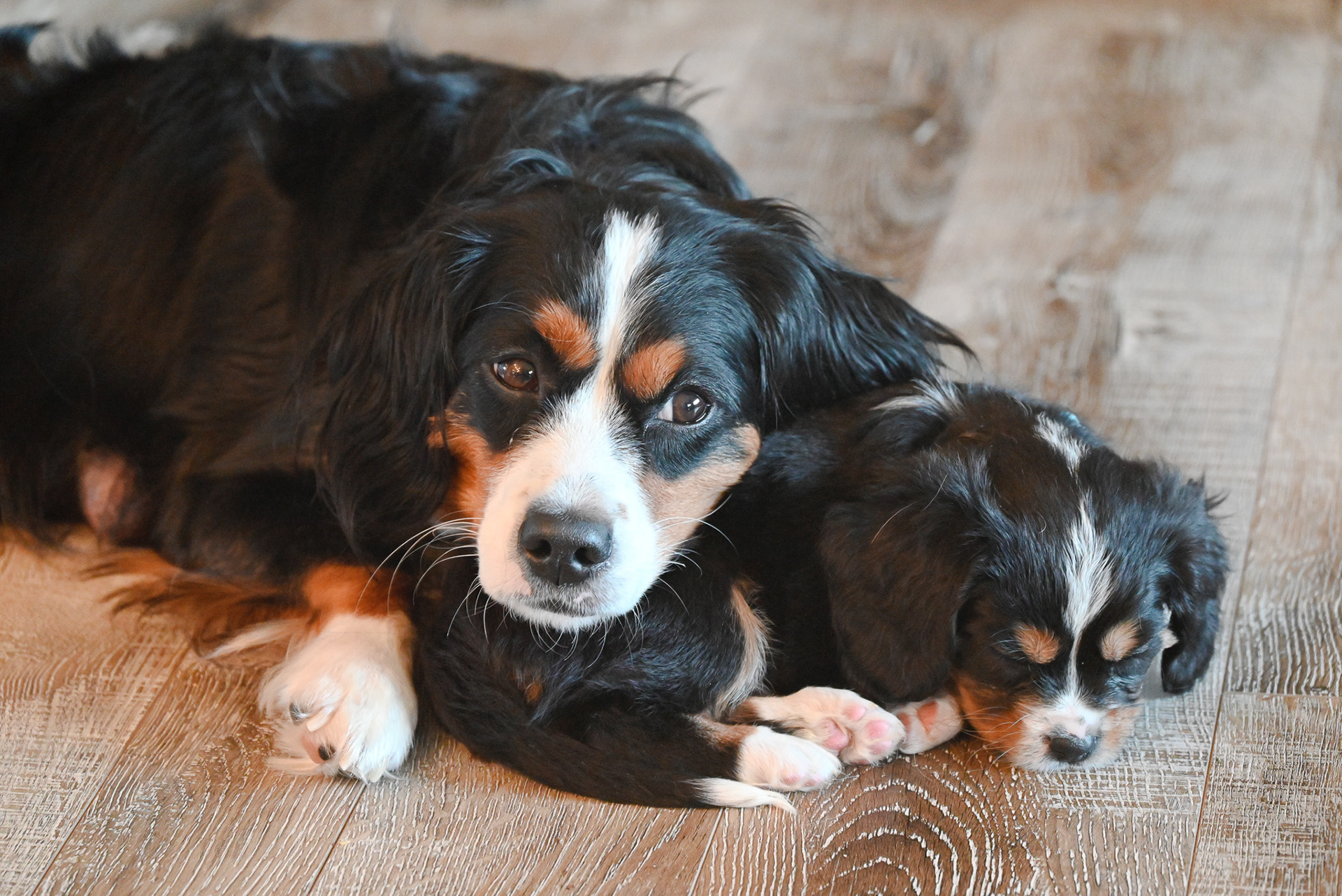
Mom and Femail Pup
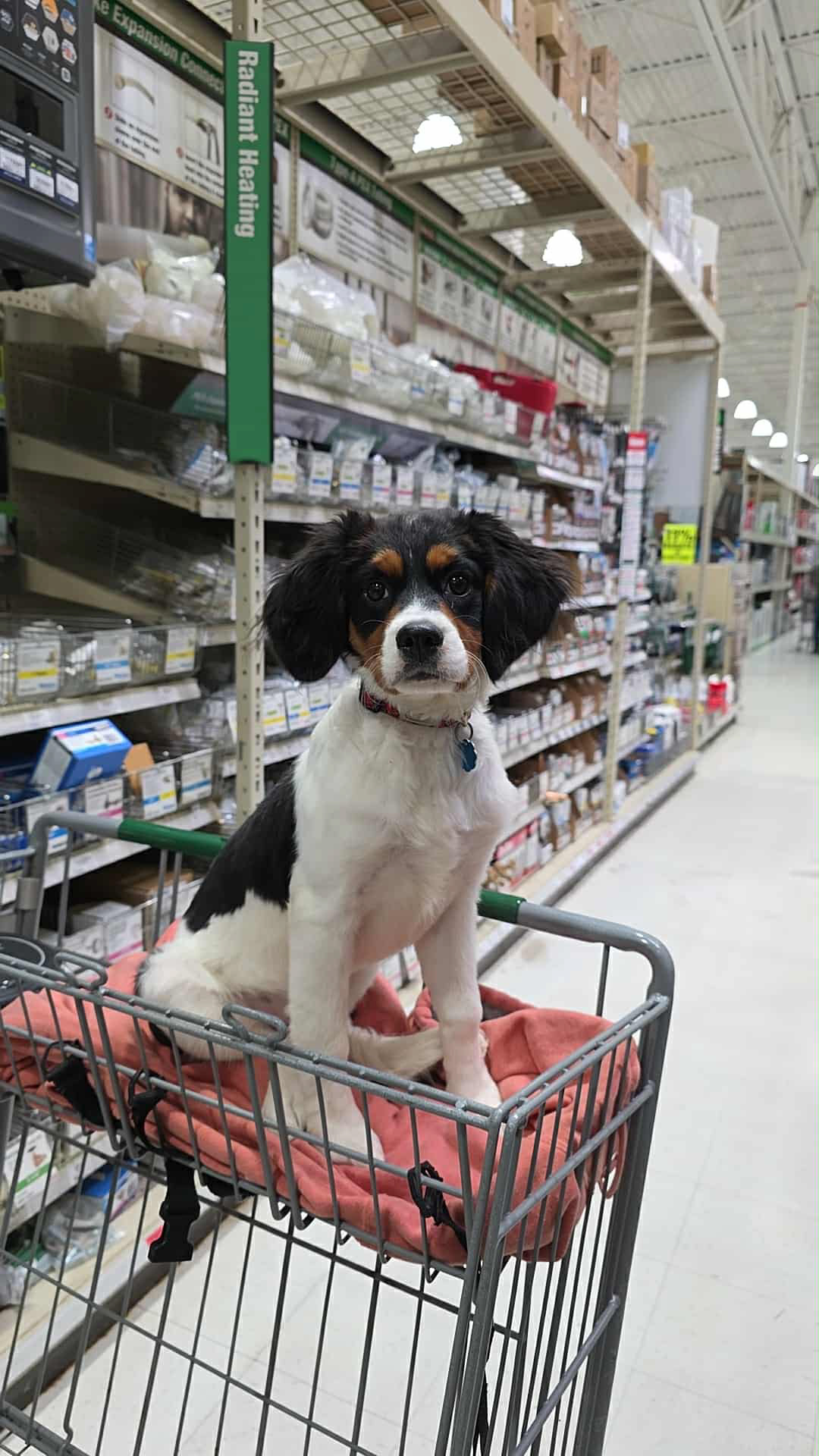
Female May25 Litter
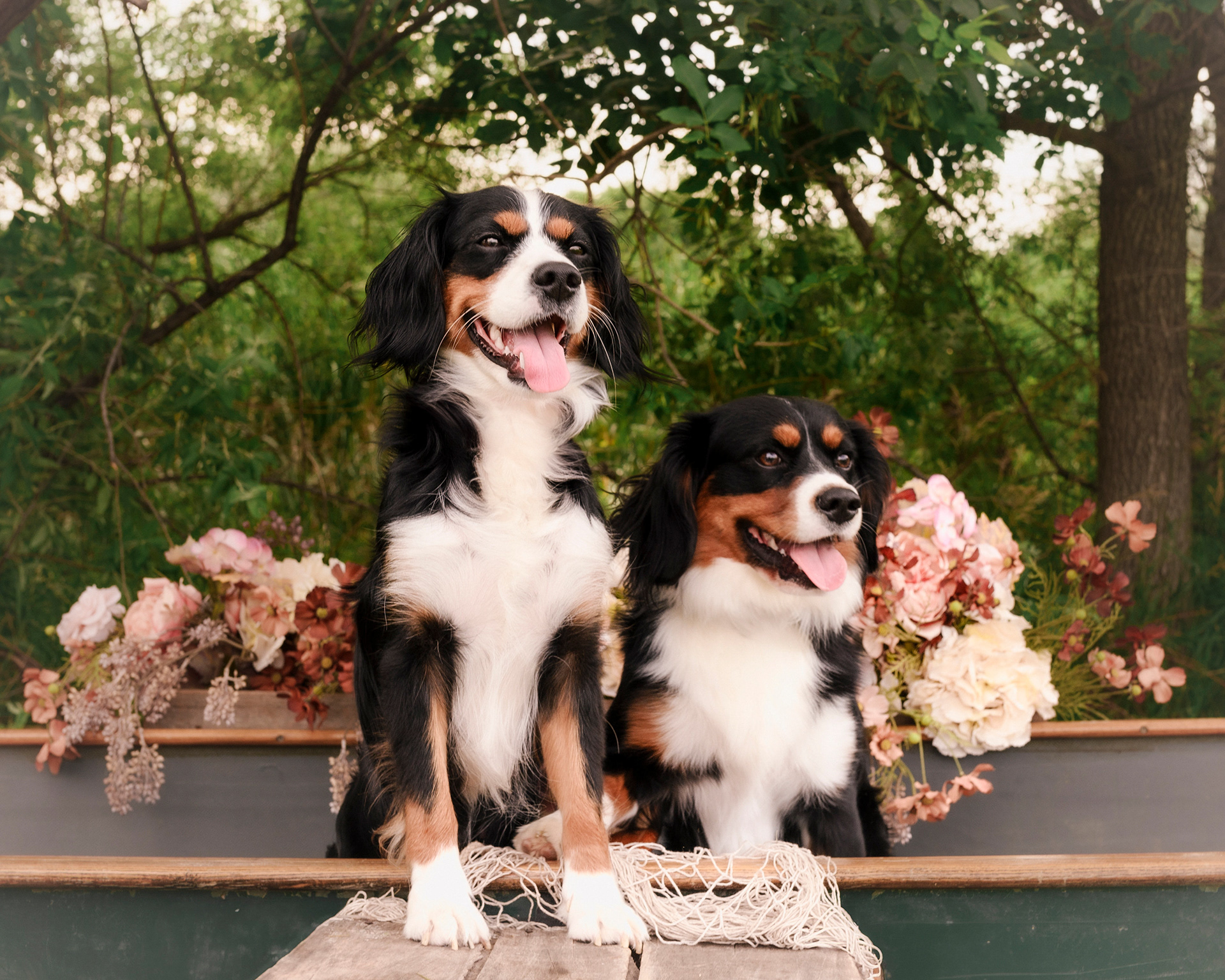
Bernie (Mom) Bandit (Dad)
Mini Bernese Temperament
This is where the Mini Bernese truly shines.
Many families describe them as:
Loyal and people-oriented
Gentle and affectionate
Sensitive and emotionally intuitive
Eager to please
Social when properly introduced
Mini Bernese often bond closely with their families and prefer being near their people rather than alone for long periods. They tend to respond best to calm guidance and positive reinforcement rather than harsh correction.
Early socialization plays an important role in confidence development. The American Veterinary Society of Animal Behavior provides helpful guidance on puppy socialization (https://avsab.org/wp-content/uploads/2018/03/Puppy_Socialization_Position_Statement_Download_-_10-3-14.pdf).
SIZE & APPEARANCE
Adult size depends on parent genetics and growth patterns. Most Mini Bernese fall into a small-to-medium range, but variation is normal.
Common characteristics may include:
A sturdy, balanced build
Expressive eyes and soft facial features
A wavy or fluffy coat
Classic tricolor patterns, though variations occur
Because this is a mix, no two litters are exactly the same.
Is a Mini Bernese Right for You?
A Mini Bernese may be a wonderful fit if you:
Want a family-centered companion
Enjoy daily interaction and inclusion
Are committed to training and structure
Understand that shedding and grooming are part of dog ownership
They may not be ideal if you:
Need a completely independent dog
Prefer minimal grooming
Expect zero shedding
Are away from home for long stretches daily
Mixed Breeds & Genetics: A Balanced Perspective
One common question we hear is about “hybrid vigor.”
Crossbred dogs may benefit from increased genetic diversity compared to tightly line-bred populations. Greater diversity can sometimes reduce the likelihood of certain inherited conditions. However, hybrid vigor is not guaranteed.
Health outcomes depend primarily on:
Responsible breeding decisions
Health-tested parents
Proper veterinary care
Nutrition and lifelong management
For more information on canine health testing and genetics:
Orthopedic Foundation for Animals (https://ofa.org/)
UC Davis Veterinary Genetics Laboratory (https://vgl.ucdavis.edu/)
AAHA Canine Vaccination Guidelines (https://www.aaha.org/resources/2022-aaha-canine-vaccination-guidelines/)
We believe transparency and responsible practices matter more than marketing language.
Trainability & Daily Life
Mini Bernese are intelligent and generally eager to learn. Consistency, patience, and structure make a significant difference.
We recommend starting with:
Name recognition
Recall (“come”)
Sit and down
Leash manners
Leave it / drop it
Calm greeting habits
Short, positive training sessions are far more effective than long, intense ones. These dogs tend to thrive when expectations are clear and routines are predictable.
Potty Training & Crate Training Basics
Potty training works best when:
Puppies are taken outside after waking, eating, drinking, and playing
Success is rewarded immediately
Accidents are handled calmly
Supervision is consistent
Crate training can:
Provide structure and safety
Encourage restful naps
Help prevent destructive behavior
Build gradual independence
EXERCISE & ENRICHMENT
Mini Bernese typically have moderate energy levels.
For puppies:
Several short play sessions per day
Short walks that gradually increase
Plenty of rest
For adults:
Daily walks
Playtime
Mental enrichment (puzzle toys, scent games, light training)
Avoid repetitive stair climbing, forced running, or high-impact exercise during growth stages.
Coat & Shedding
Coat type can range from silky to moderately fluffy depending on genetics.
General grooming needs:
Brushing 2–4 times per week
Increased brushing during seasonal shedding
Nail trimming every 2–4 weeks
Weekly ear checks
Early introduction to tooth brushing
Shedding is typically moderate but varies by individual.
FIRST WEEK HOME: DO & DON’T
Do:
Keep a simple, predictable routine
Use baby gates or a crate for supervision
Reward calm behavior
Offer safe chew options
Practice short periods of alone time
Don’t:
Punish potty accidents
Overwhelm with too many new experiences at once
Over-exercise growing joints
Allow rough handling from children
Give full access to the house immediately
Structure creates confidence.
Why We Love This Breed
Mini Bernese are not just dogs to us — they are companions with gentle hearts and steady temperaments. We appreciate their emotional sensitivity, their loyalty, and their ability to adapt to family life.
Watching them grow from playful puppies into devoted companions is something we never take for granted.
Further Research & Trusted Resources
Parent Breed Information:
Health & Vaccination:
Behavior & Socialization: